

By the end of Day 2, three scenes ran from the first slate to the wrap card. Each taught the same lesson in a new place: stop the film, change a rig, and change what happens to an object — a sign, a pallet, a cinema front. On the evening of 13 November the developer asked whether the game could end on a fourth scene, bigger than the other three. The research on Day 2 stopped on that open question. This page is how it was answered — and, in its second half, everything else that happened on 14 November.
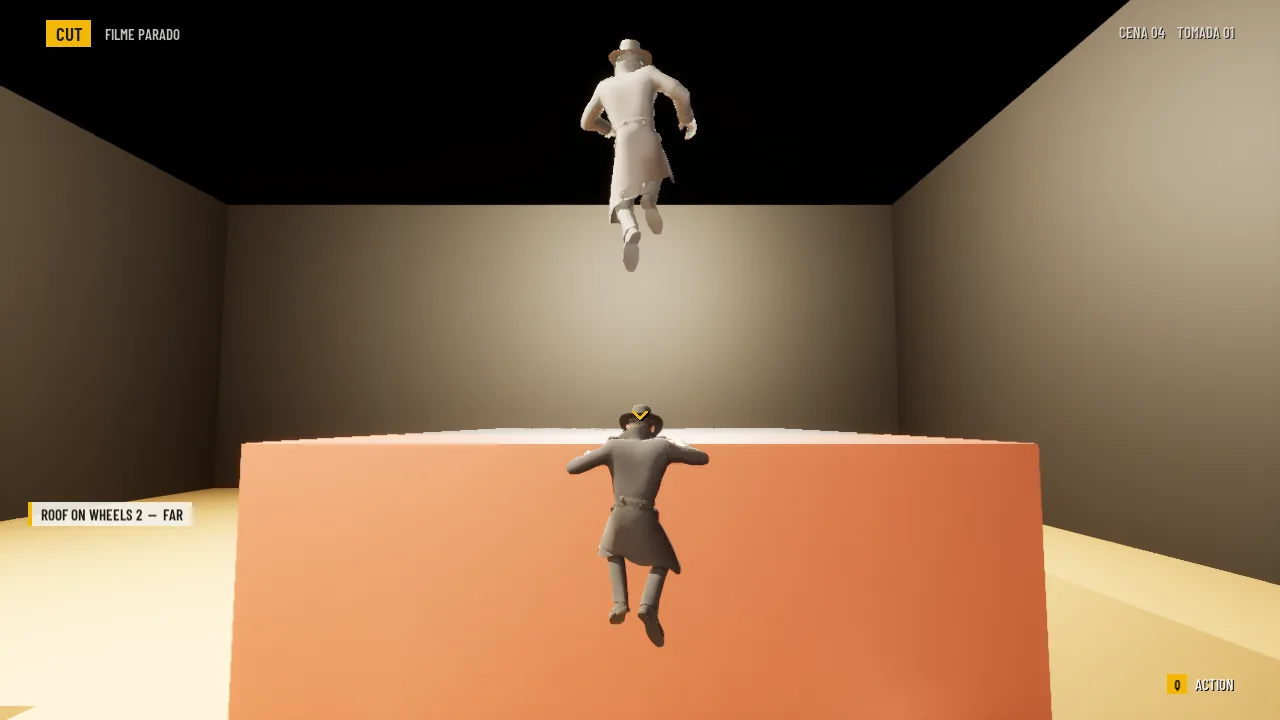
The game grew beyond surviving a movie. In Scene 4 you can stop a leap in mid-air and move the world to finish the shot.
What follows does not give away the solutions. It shows how the scene was found, built, broken and fixed — and where a person, not an agent, made the call.
The Impossible Take — night, 14 November#
The rejected idea#
Agent 04, the design agent, had scored three candidates on the evening of 13 November and recommended the highest: ROUND THE BLOCK, a chase in which the car is the clock. The developer did not approve it.
When the agent wrote its second proposal, it began by saying why the first had failed: it reused everything, so it looked the same — another street, another car, more winches. The criterion it had scored by, the least new code, was the wrong one for the scene that has to be the game's highlight. The first proposal and its three companion documents stay in the project as history, marked as superseded.
The breakthrough: freeze the actor, move the world#
The second proposal was built around one sentence: the actor's mark is absolute; the set is relative. In the first three scenes the director only changes what will happen to an object. In a new scene, CUT would freeze the actor wherever he is — even in mid-air — and the director would move the scenery around him.
Three new concepts came from it:
- THE LEAP: an alley, a warehouse, and a jump between rooftops that no one could make — unless you call CUT in the air and roll the next roof under the actor.
- THE REVOLVE: a turntable stage with three sets; the director turns the world between one frame and the next.
- LIGHTS OUT: light is the danger, and the director is the lighting crew.
The agent chose THE LEAP, for the most image and play per hour of work, and because it could be built backwards: the climax first, which is already a complete scene on its own. It was also blunt about time. The full three-part version, by its estimate, would take 22 to 29 hours of the lead agent's work and would not fit safely in the jam. The rooftops alone would.
Nothing new had to be invented for the frozen jump itself. The actor's mark already stored position, rotation, speed and movement mode, and an existing scripted test had shown a mid-air CUT returning the actor within 4.3 cm of where he left. What was missing was everything around it.
A first greybox on the rooftops#
The developer asked for a first greybox of the rooftops, switched off by default so the three-scene game stayed untouched. The lead agent built:
- three rooftops and two roofs on wheels — a new set piece: a roof with real collision, whose stops are chosen with a lever. It refuses a stop whose path would go through the frozen actor, and the rig card says it is too late;
- falling as a failure: drop below a line and the take is out of frame;
- the jump, measured before any gap was drawn: 509 cm on the flat.
Four scripted runs — a fall, a near-and-far check, a complete solution with the CUT in the air, and a lever pulled too late — passed in the editor and in the packaged build.
 CUT
Building the sequence: alley, warehouse, rooftops#
The developer then asked for more than the jump: a complete, cinematic sequence, with two new environments, two situations the game had never had, CUT at the moments that matter, checkpoints, and the leap as its climax. The agent had said the full version would not fit safely; the developer asked for it anyway, and the lead agent found a cheaper way to build it.
Three parts, three chained scenes. Scene 4 is three scenes under one number — 04A, 04B, 04C — chained the way the game already chains Scenes 1 to 3. Each part is the checkpoint for the next: fail on the rooftops and you don't go back to the alley. A short card separates the parts, the action music runs across them without restarting, and the closing card adds up their takes.
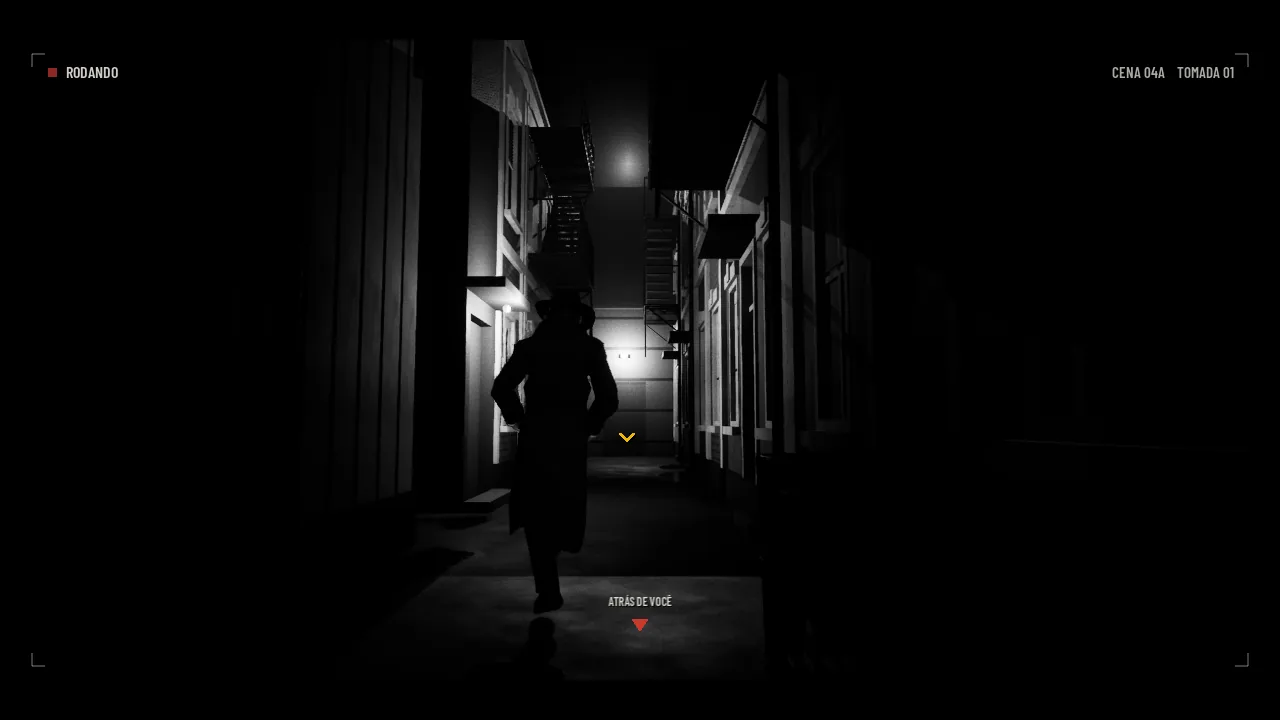
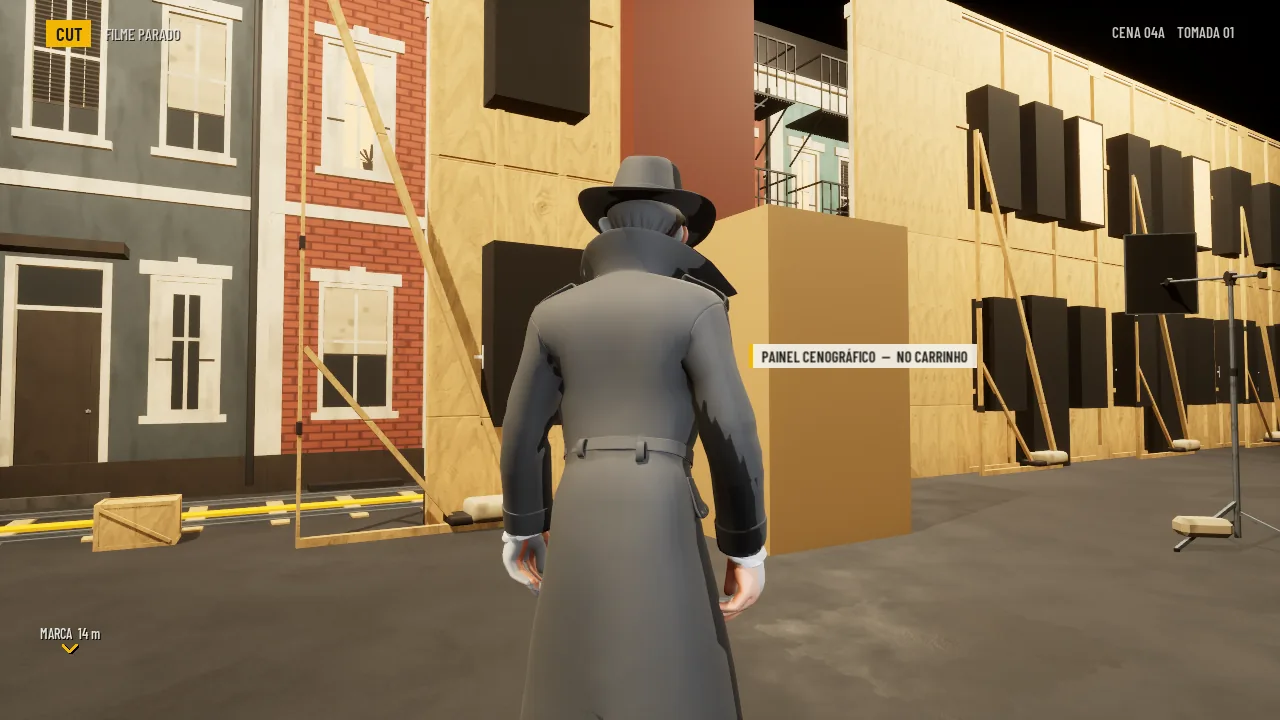
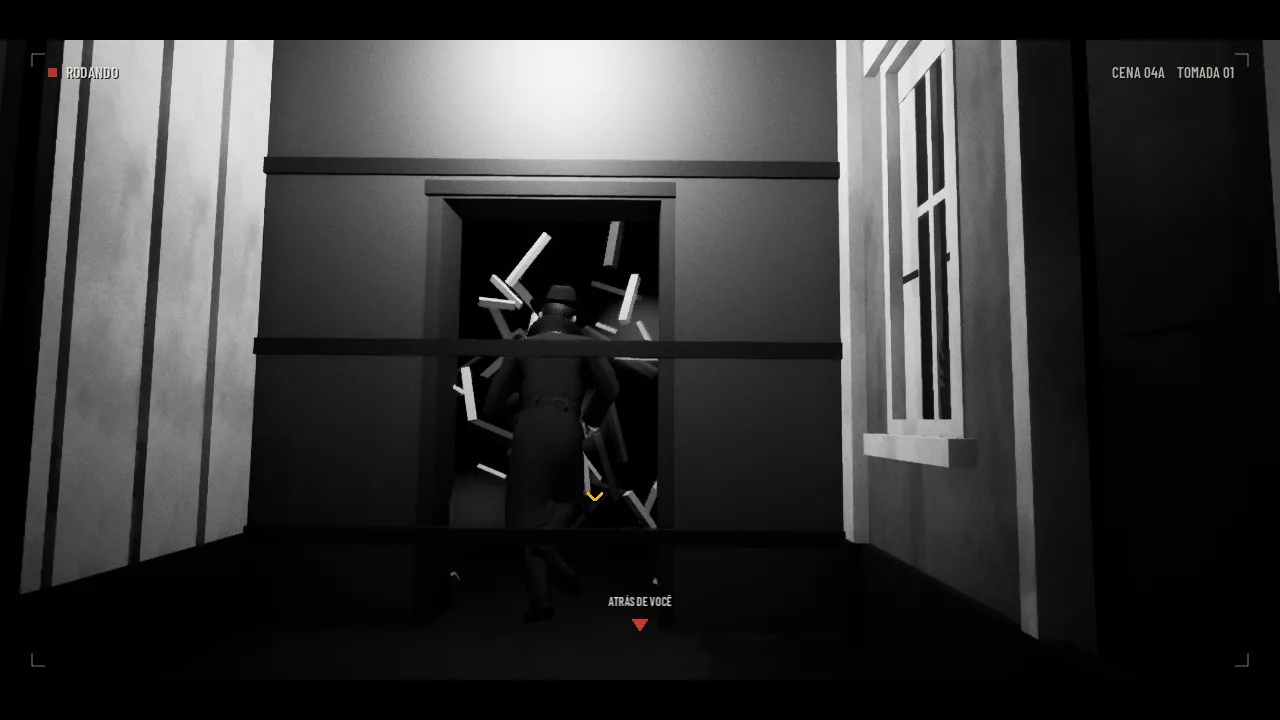
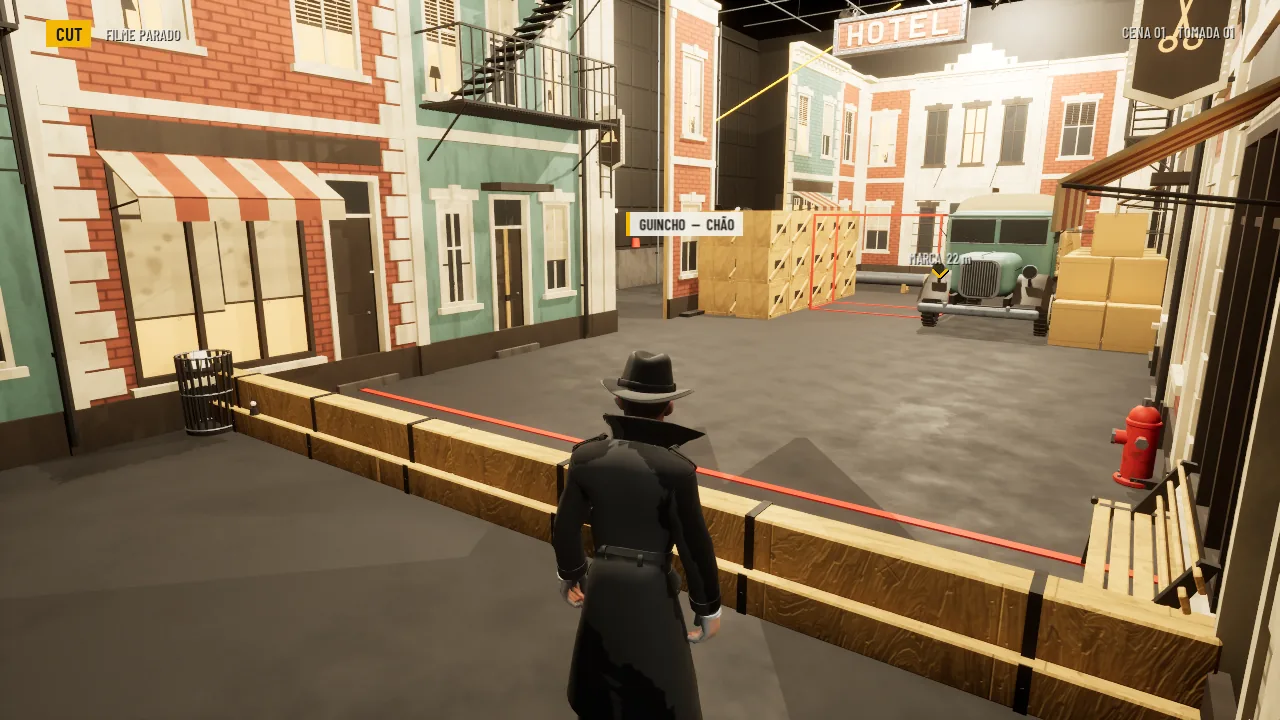
4A — The Alley. A car behind you, and the alley ends at a warehouse. The new piece here is a breakaway panel: a prop door made to be smashed through on camera. It only breaks if the actor arrives running, and the alley has more than one door. In CUT, the alley shows its back: plywood, braces, the lighting grid, and the panel waiting on its cart.
 01
 02CUT
4B — The Warehouse. Crates climbing to a landing, a 7 m gap, and an overhead crane whose walkway travels across the warehouse on the scene clock. The director has a brake. It holds the crane at the frame of the cut — which makes when you cut the whole question. Behind you, the car breaks through the gates.
4C — The Rooftops. The greybox jump, dressed: facades as the skin of the roofs, roof props and the HOTEL sign, a layered city, moonlight, and a camera that pulls back while the actor is in the air to show the drop. The collision stayed exactly as measured.
By 06:20 the editor runs had all passed, including one that plays 4A, 4B and 4C to the closing card and then starts the whole scene again with every rig back to factory settings. Seven runs passed in the packaged build, plus the full scene with the engine forced to collect garbage every frame (why that matters is further down). Scene 4 stayed off by default, waiting for a person to play it.
The Impossible Take — afternoon and evening, 14 November#
What the first playtest broke#
The developer's first playtest of Scene 4 found two ways around it:
- in 4B, they crossed on the crane's walkway without using the brake — waiting until it lined up and running across;
- in 4C, they went around the first moving roof by hopping to the roof beside it.
The lead agent reproduced both with scripts before touching anything. Both scripts printed the shot — the shortcuts were real. The causes were in the geometry: the walkway had open ends, lined up with the gap for about 0.4 s, and carried whoever stood on it; the first roof on wheels parked a metre from the corners of the roofs around it.
The fixes went into the geometry, not into new rules:
- 4B: the walkway became a cage, with a folding gate at each end. The gates stay shut while the crane runs and fold open when it is braked — the brake is the lock. The rig card says so: RUNNING, GATES SHUT; BRAKED, GATES OPEN.
- 4C: the first roof on wheels parks 8 m from both neighbours, further than the actor can jump, and rolls faster in CUT.
- As a precaution, the crates along the warehouse's north wall came down from 3.2 to 1.6 m. The script that tried that route fell 13 cm short, which was too close.
Every jump on the rooftops was re-checked against the measured reach. Both shortcut scripts now end at a shut gate or in a fall, and the intended solutions still work: 12 of 12 runs passed in the editor, 6 of 6 in the packaged build.
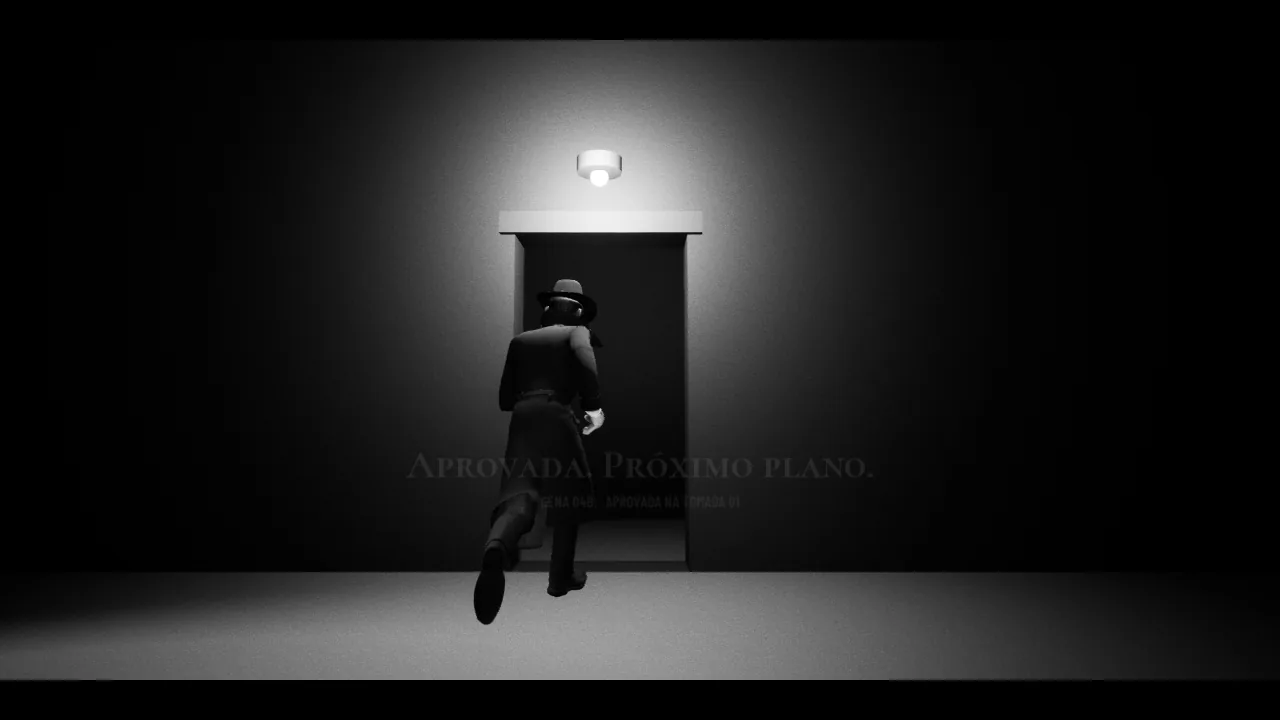 01ACTION
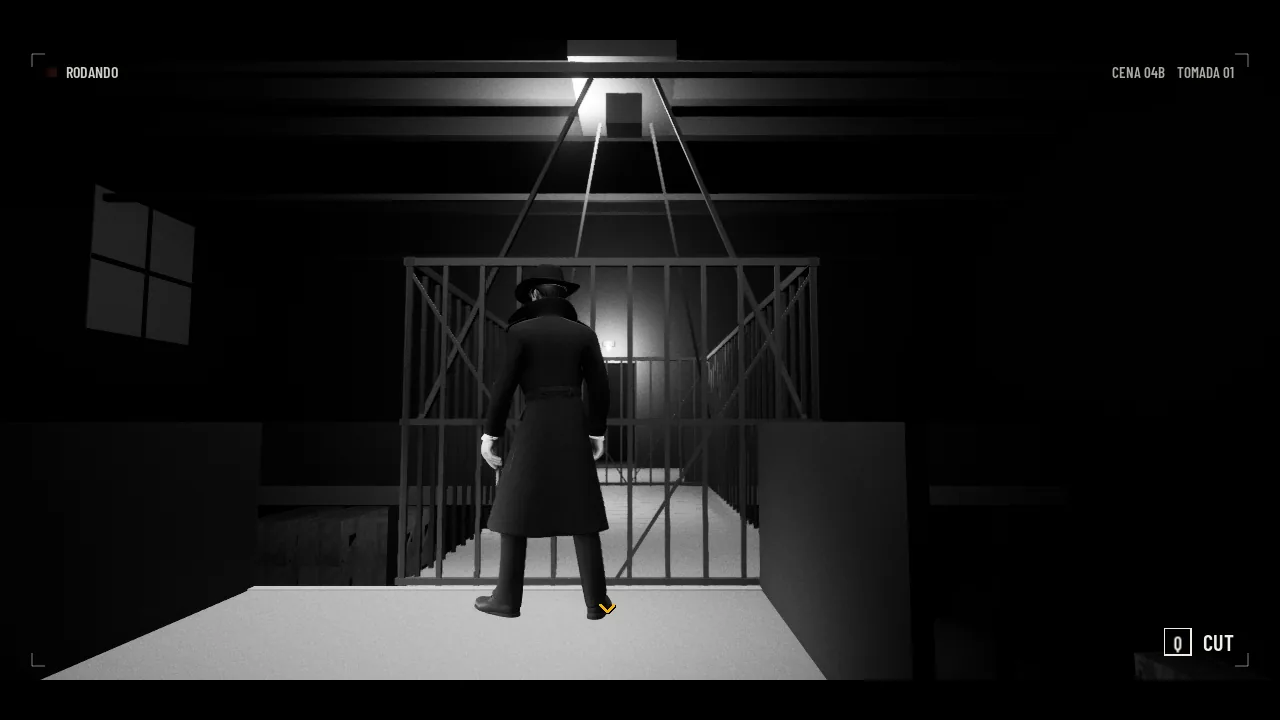 02ACTION
Later that evening the developer played the fixes and approved them.
Dressing the warehouse and the rooftops#
The developer's brief to the art agent was clear about what not to do: don't redesign the puzzles — raise the art direction of the warehouse and the rooftops, and make the detective frozen over the void the visual high point of the game.
The art agent delivered 28 models, made in Blender by script, without generative AI: the crane as a real machine (runway, trolley with hoist and brake, the caged walkway, a backstage tower), steel trusses and industrial windows, stacked crates, and for the rooftops parapets, a water tank, a chimney, a skylight, vents, an antenna and wires, forced-perspective flats for the drop, a near skyline and a moon. The lead agent hung them over the greybox; the boxes are still the collision. The doors and gates of 4A were not part of this delivery, so the alley keeps the dressing from the morning.
Scene 4 also got its own sound: sixteen effects made by the audio agent from sound files already approved for the project, plus simple synthesis, without spending credits — the door bursting, the car at the gates, the crane running and stopping, the brake lever, the warehouse and the rooftops, the jump, the fall, the CUT in mid-air, the roofs rolling. Scripted runs show each one firing on its event. Nobody had listened to them inside the game yet.
Wiring the sound turned up a bug nobody had seen: the roofs on wheels never actually rolled in CUT. Moving the lever re-evaluated the scene on the same frozen frame, so they jumped straight to their stop. Now they roll.
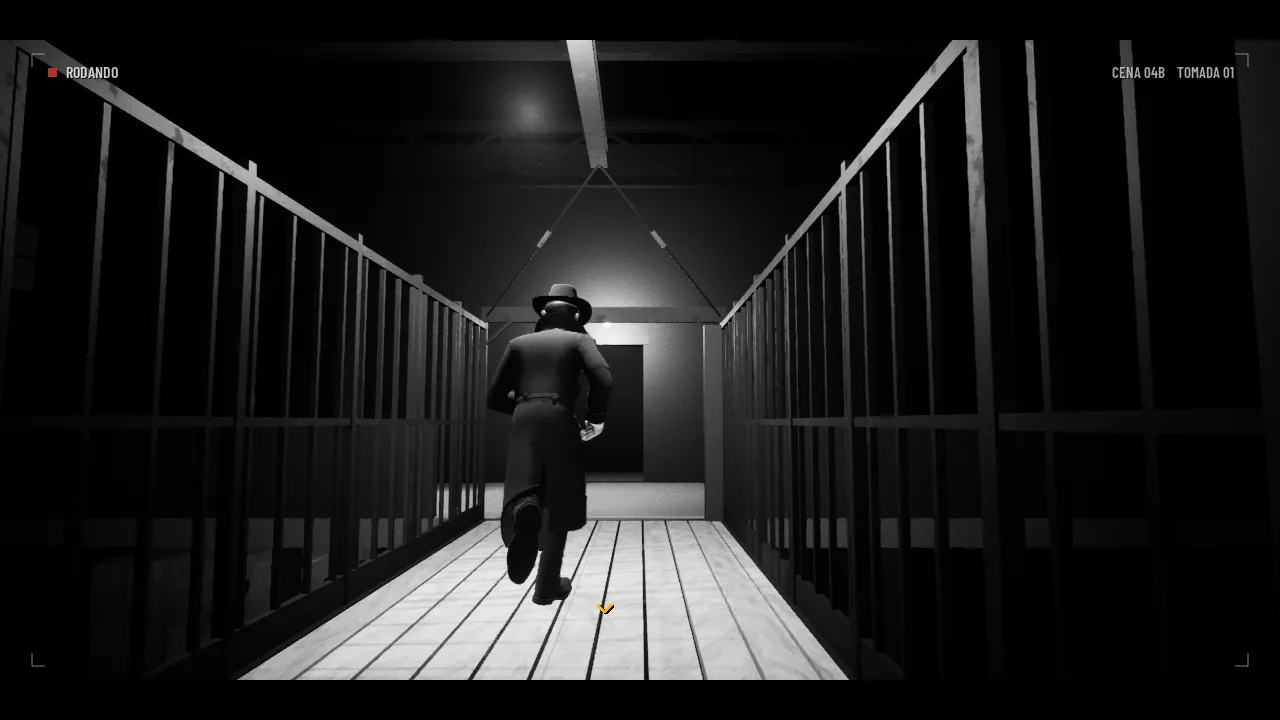 01ACTION
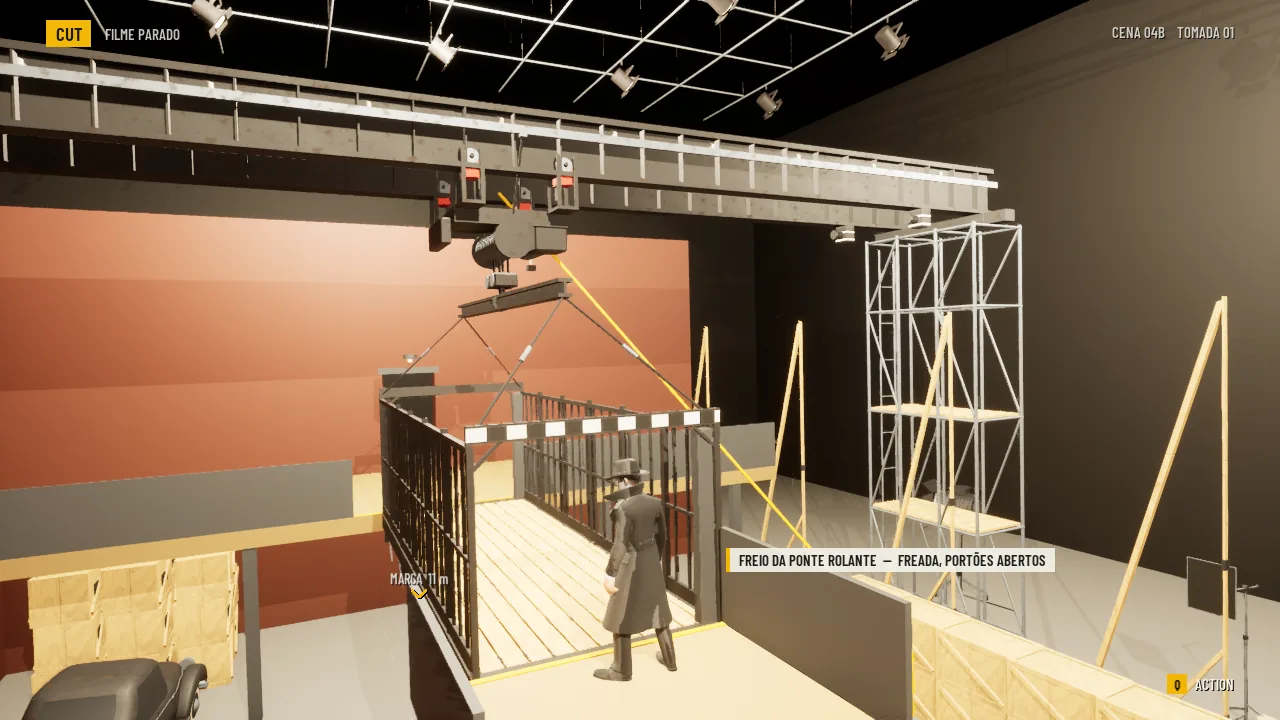 02CUT
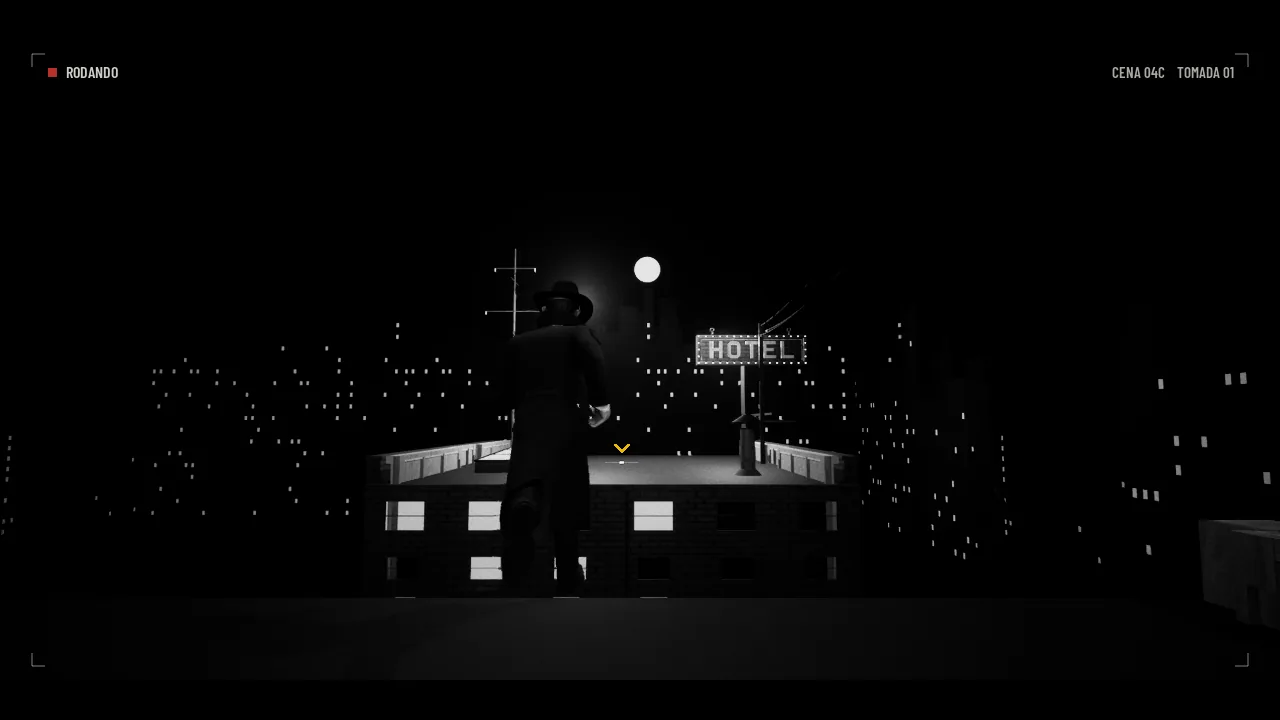 01
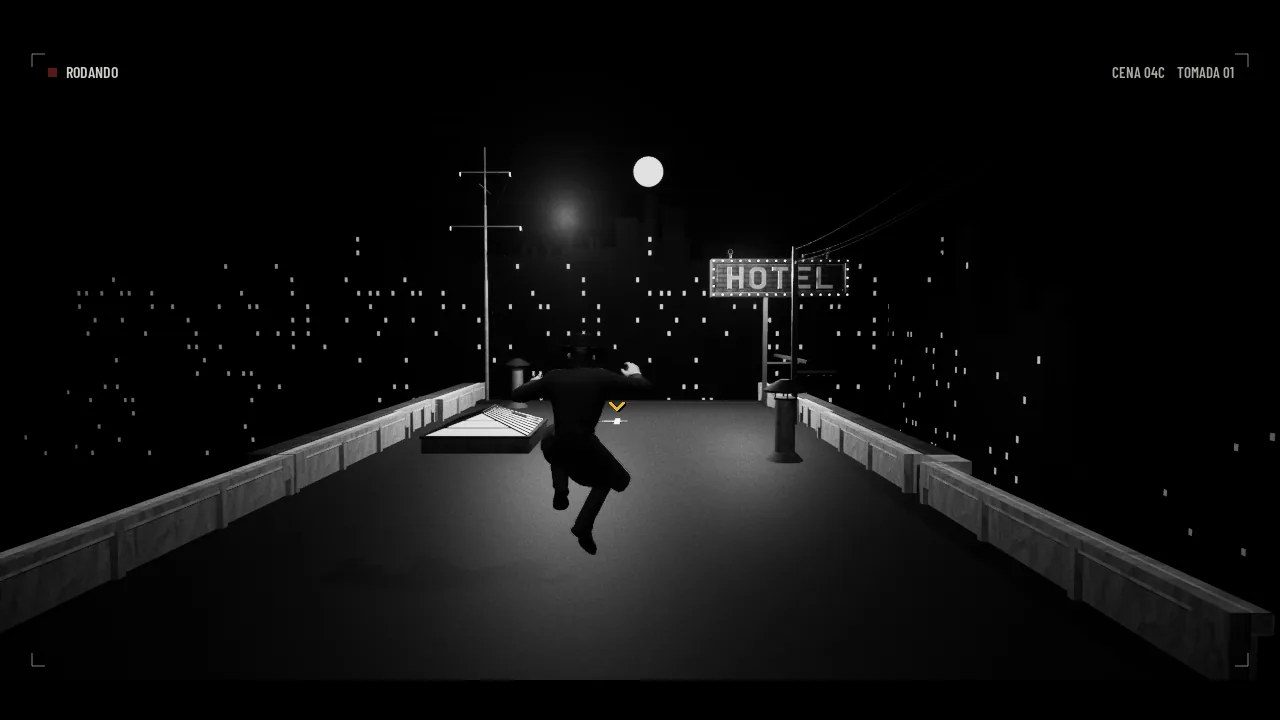 02
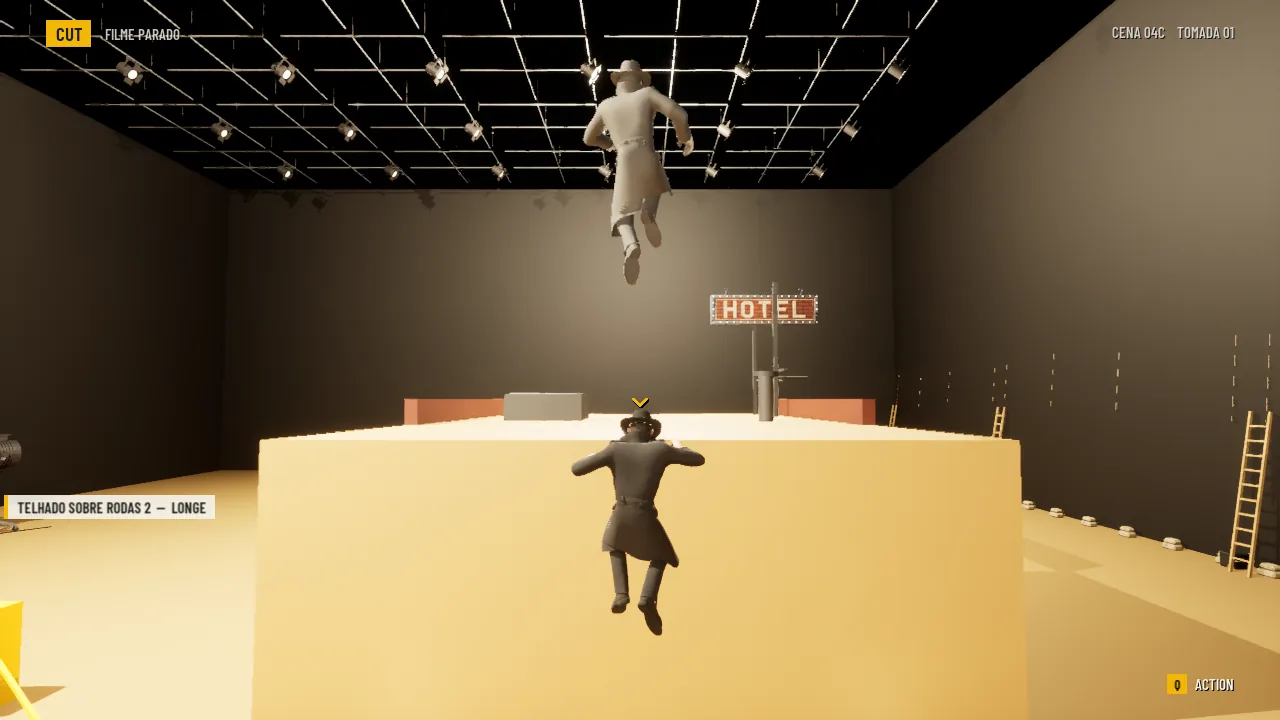 CUT
Four scenes in the production#
After the build with the new art, the developer's answer to "switch Scene 4 on?" was yes.
- The game now runs Scene 01 — The Falling Sign, Scene 02 — The Chase, Scene 03 — The Final Take and Scene 04 — The Leap, in three parts.
- The closing card counts all four, with Scene 4's takes summed across its parts.
- Between scenes the print music plays; the wrap music waits for the end.
- The three-scene production is kept as an option, with its own launcher.
A new scripted run plays the whole production from Scene 1 to the four-scene closing card. It passed in the editor with sound, in the packaged build, and in the packaged build with garbage collection forced every frame.
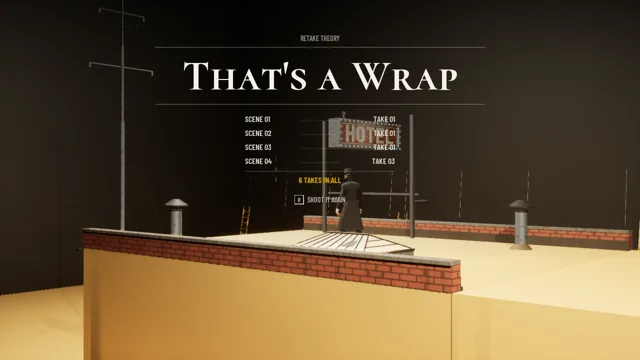
What made it possible#
- A film that is a formula. Every moving thing is a function of the scene clock. Freeze the clock and the alley, the crane and the roofs freeze exactly, on the same frame, every time.
- A mark that keeps everything. Position, rotation, speed, and whether the actor is running, falling or jumping. That is why a jump can be paused and resumed.
- Collision that moves, carefully. A roof on wheels is real floor. It won't accept a stop that would pass through the frozen actor; the lever says it's too late instead.
- Parts as scenes. Checkpoints came from chaining scenes — something the game already did and already tested — instead of building a checkpoint system inside a scene.
One rough edge is known: on the first frame of a mid-air CUT on the rooftops, the frozen stand-in fills the screen until the director walks away from it.
Where Scene 4 stands#
Verified: four scenes in the default production. Scripted runs play it from the first slate to the four-scene closing card in the editor, in the Development build and in the English-only Shipping build. The two shortcuts from the first playtest are closed, and the developer approved the fixes in a second playtest.
Not verified yet:
- whether Scene 4 is fun, and whether the panel and the brake read without hints;
- whether the leap lands as the moment of the game — only players can tell us that;
- how the new sound plays in the game;
- a complete playthrough of all four scenes by a person;
- frame rate in full-screen 1080p.
The crash, the newsstand, the footsteps and the release candidate are below.
Off camera — night, 14 November#
The first half of this page tells the story of Scene 4. This half covers everything else that happened on 14 November: a playtest that silenced the music, a crash that looked random and wasn't, three versions of a smashed newsstand, a sound pass no script can judge, and the first candidate for the file the jury will download.
The music that never came back#
The developer's playtest of the night build had a short note: the music stops at CUT and never comes back. They also asked whether the studio's own sound was playing in CUT at all.
The cause was in how the engine fades sound. The lead agent read Unreal's own source: a voice faded all the way to zero is marked as stopping, and the engine ends it when the fade completes. So when ACTION tried to resume the music, there was no voice left to resume. The film's rain died the same way — and the studio's room tone, which plays only in CUT, had probably never been heard.
The fix is one rule: a paused voice goes down to −60 dB, never to zero. A new scripted run reads the real state of every voice through four CUT/ACTION cycles, a retake and the pause menu. In every CUT: music paused, rain paused, studio playing. In every ACTION, the reverse. Every scripted run in the project now fails if a voice is lost. It passed in the editor and in the packaged build.
Road works and a newsstand#
The art agent's first obstacle pass went in at the same time:
- Scene 1: the kerbs you jump became road works — timbers and a gas main. The collision boxes underneath didn't change.
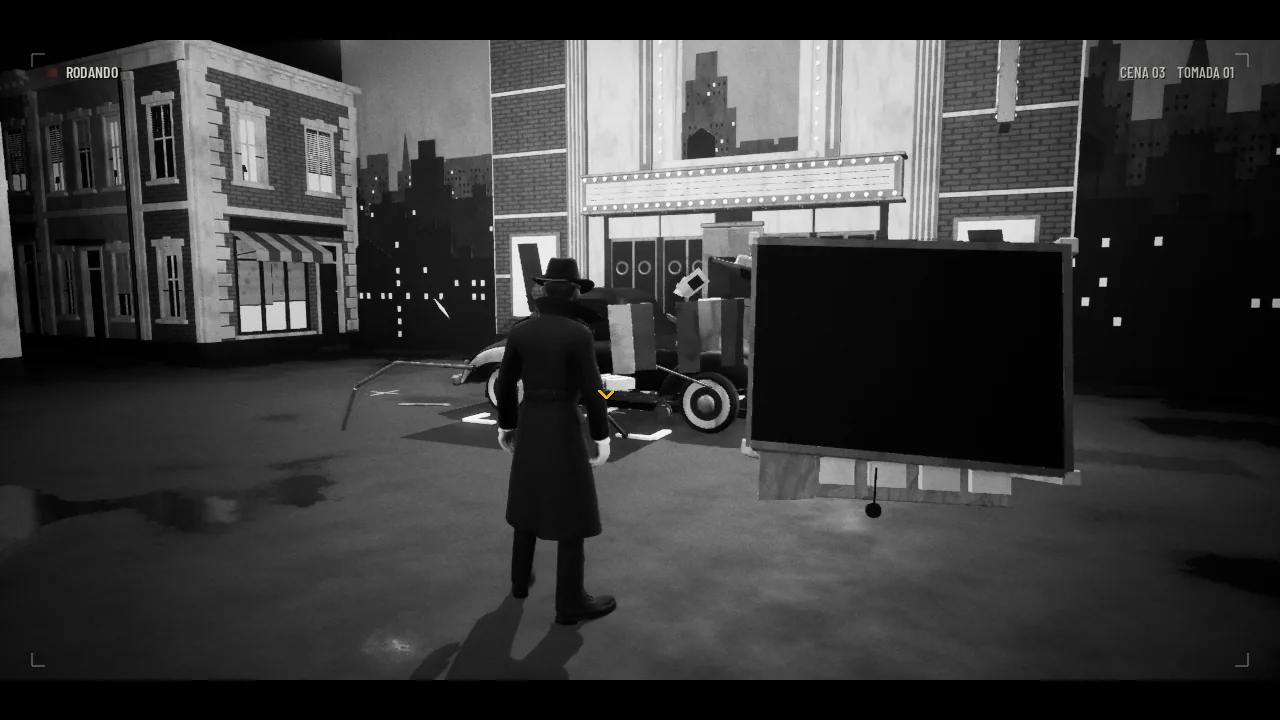
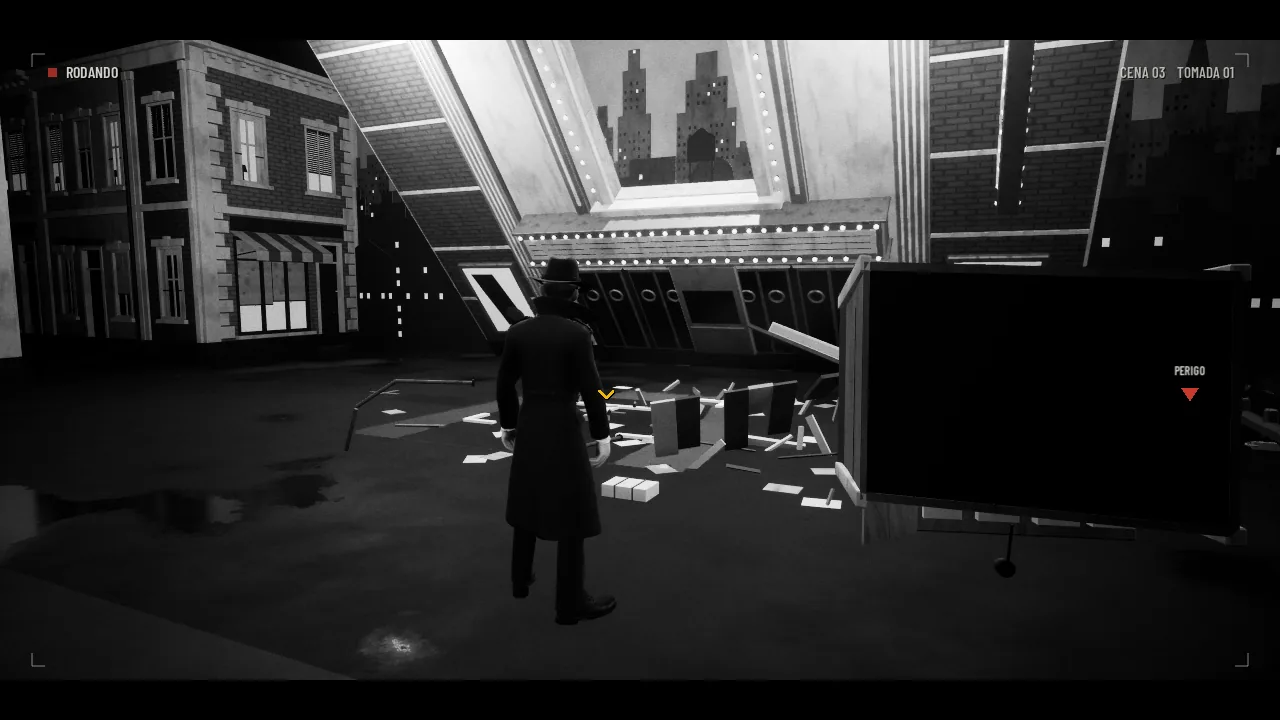
- Scene 3: on the car's main line, the newsstand is now smashed by the car, following a choreography the art agent made in Blender. It is a function of the scene clock like everything else: it freezes in CUT and stands whole again on a retake.
 CUT
A crash that looked random#
Then the developer reported a crash in the 03:50 build. Sometimes, when the car reached the newsstand, the game closed. First attempt: crash. Next three: fine. Then again.
The lead agent worked it like a bug, not like bad luck:
- Data. Two crash reports, both an invalid memory read; both logs stop on the line where the newsstand is struck.
- Call stack. A script resolved it with the build's debug symbols: the crash was in the code that hands each newsstand piece its broken mesh at the moment of impact.
- Hypothesis. The meshes were only referenced from a plain data structure that Unreal's garbage collector can't see. After a collection, any mesh not on screen could be freed — and the next impact would use freed memory. That explains the pattern: it only crashed if a collection, roughly once a minute, had run before the car arrived.
- Proof. Forcing a garbage collection every frame, the old build crashed on its first run, with the same call stack.
- Fix. The meshes are now held where the collector can see them, and a missing mesh hides its piece instead of being used.
On the fixed build, the newsstand run passed 5 times out of 5 with a collection forced every frame and 10 out of 10 without. Each run smashes the newsstand twice, with a CUT, a retake and a new production: 30 smashes, no crash. Scene 3's solutions still passed.
The bug left a rule behind: every new system is tested in the packaged build with a collection forced every frame. Scene 4 has been tested that way ever since. The agent reviewed the code written that night for the same pattern; it did not review all the older code.
Three newsstands#
The smash raised a design problem. Scene 3 has three solutions, and one of them uses a mark the newsstand blocks. If the wreck is low enough to look real, a player could walk over it to that mark after the car passes and print the shot without touching a rig. So the newsstand's collision box stayed up, and the agents tried to make a wreck that justified it.
- Version 1 (the night build): the newsstand torn apart, with its 2.25 m collision box still standing over what was left — a wall nobody could see.
- Version 2 (art agent, 03:30–05:20): the developer asked for a newsstand that looked truly hit and crushed by a car, not boxes stacked to block the player — and still blocking the mark. The agent built a heap at least 1.5 m high over three quarters of the footprint, measured by script. The developer rejected it: it read as a newsstand that reassembles itself, the pieces seeming to rebuild after the impact.
- Version 3: the brief changed. Convincing, irreversible and cinematic; don't force the height; if the collision can't be kept, document the conflict and propose a separate solution. The pieces are thrown west, the way the car travels, and to the sides; the roof caves in over the car and drops behind it. A script checked that no piece moves back against its own direction. The wreck ends low — 21 cm on average.
The conflict went to the lead agent, who solved it with a rule instead of a wall. The box blocks only while the newsstand stands. From the frame of impact, its footprint is out of the film: step into the wreck and you lose the take — YOU STEPPED INTO THE WRECK. No invisible wall, no new way to the mark, and Scene 3's three solutions unchanged. Version 3 went in at 19:15, with version 1 kept behind a switch.
 01
 02
Off camera — evening, 14 November#
Footsteps, menus and a wooden crash#
The final polish sprint brought in 76 sounds at once:
- Footsteps (50): cut from seven generated sets (ElevenLabs, 320 credits, authorised by the developer); five possible double steps were left out. A step plays when the ball of a foot comes down in the animation: wet street, puddle, or the dry studio floor in CUT, plus a jump and a landing.
- Menus (3): made from the winch crank and the clapper already in the game, without generating anything.
- Audio Pass 2.0 (7): replacements and additions approved on Day 2, including the creak that grows on Scene 3's cinema front, the car settling in the siding and a wooden crash of its own for Scene 2's pallet, which used to share a sound with the metal sign. The pallet's crash was generated (22 credits); the developer chose it by ear over a free montage.
- Scene 4 (16): described above.
It is worth being exact about what "done" means for sound:
| Level | Status |
|---|---|
| The files, heard outside the game | The developer gave the Audio Pass 2.0 files a preliminary approval by ear. The menu sounds and footsteps are cut from material already approved or authorised. The Scene 4 sounds were not heard by anyone before integration |
| The integration, checked by script | Every sound fires on its own event: 0 duplicates, 0 lost voices, between 4 and 22 footsteps per run |
| A person listening in the game | Not yet |
A few sounds stayed out because they need a listen first, among them an alternative wrap cue that might clash with the print sting. Every change can be switched off for comparison.
A release candidate#
With four scenes on, the lead agent ran the full regression: 17 of 17 automated tests, 32 of 32 scripted runs at 60 fps and 21 of 21 at 20 fps, and 40 of 40 runs in the packaged build.
It also measured frame cost in the Development build, off screen at 1280×720 on the development machine: 9.9 ms per frame on average over the full production, with garbage collection forced every frame. That is a cost per frame, not a frame rate measured in real play.
The jam's official rules say all submission content — in-game text included — must be in English. So the jam build is a Shipping build in English only; Brazilian Portuguese stays in the code and in development builds. The ZIP comes out at 369 MB (510 MB extracted, 37 files). It was extracted into an empty folder, and the full production was played from there by script. It hasn't been tested on another computer yet.
An opening card and credits, in type only#
The developer asked for a short opening with a production credit, and a credits screen. The jam rules allow no trademarks or logos in the game except the Unreal Engine logo, so the studio appears as type only:
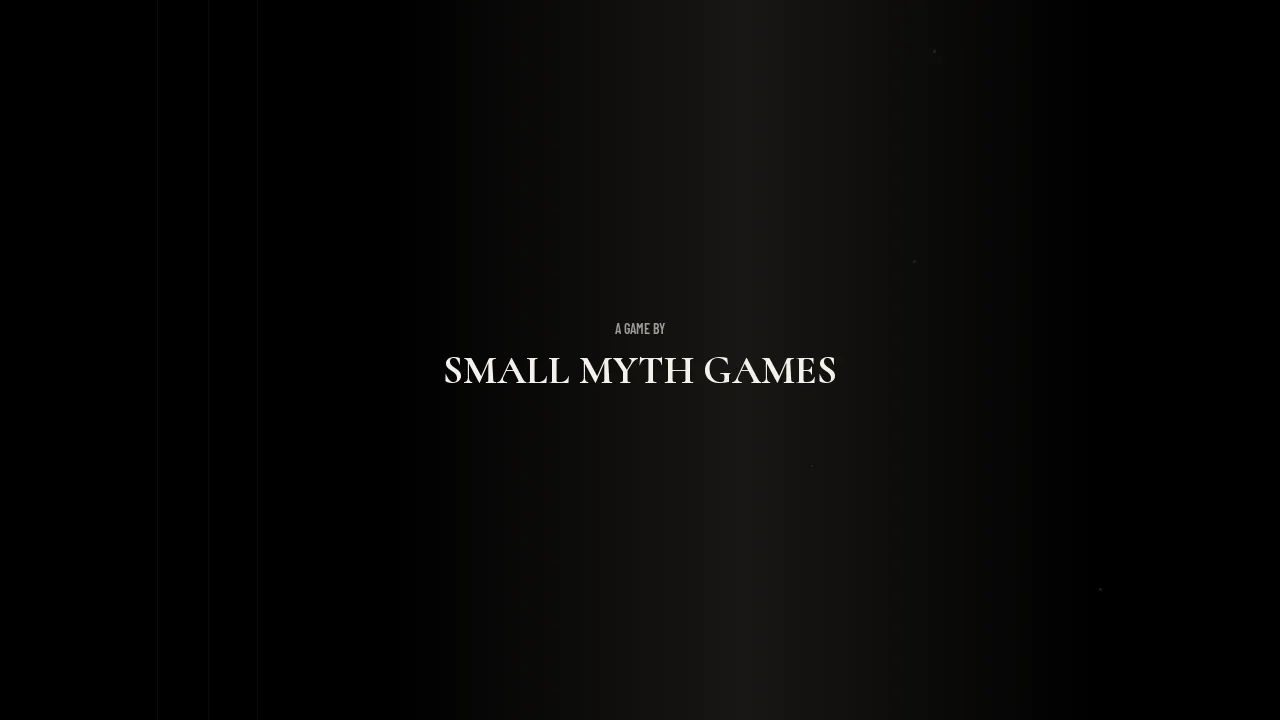
- The opening (4.4 s): black, a projector's light crossing the frame with film scratches, A GAME BY / SMALL MYTH GAMES in the game's own typeface, and the studio's room tone under it before the menu music comes in. It plays once per run; any key skips it.
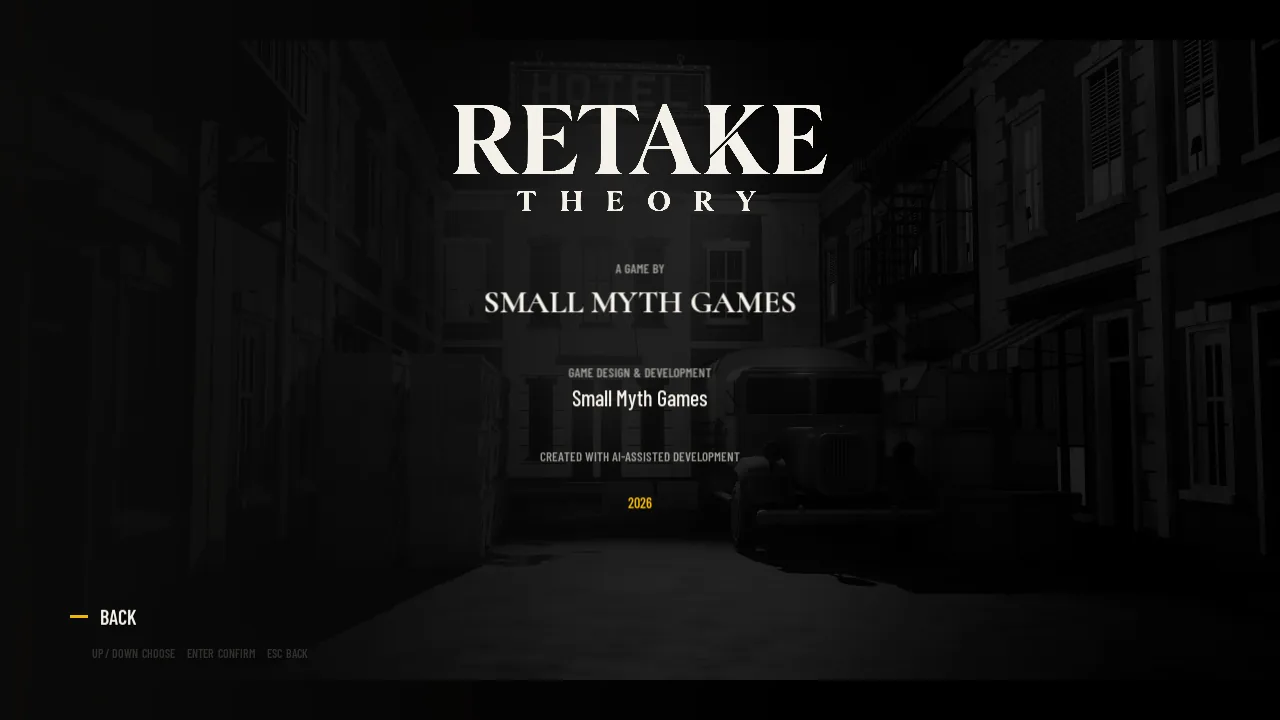
- CREDITS on the main menu: one card, with the game's own title logo, the studio's name, Created with AI-assisted development, and 2026. No people, tools or partners named.
- No Small Myth logo or logo animation in the game, hidden or switched off. They are kept for after the jam.
- The event's name stays out of the game and the ZIP. It belongs on the game's page and in this log.
The opening, the menus and the full production passed by script in the Development build, in the Shipping build and from the new ZIP, extracted. That ZIP is a second candidate; which one is submitted is the developer's decision. Nobody has watched the opening in full screen yet.
 01
 02
Where the submission stands, end of 14 November#
| Item | Status |
|---|---|
| Development build | Packaged at 22:40; scripted runs pass |
| Shipping build, English only | Packaged; the full production passes by script |
| Windows ZIP | Two candidates; not final. Not yet tested on another computer |
| Gameplay video (30–60 s) | Not made yet |
| Key art | Made on Day 2 (a Blender render) and approved by the developer; not published |
| itch.io page | Text drafted; not published |
| Promotional screenshots | Not chosen yet |
| Tools and licences | Logged as the work happened; the final credits text is still to be assembled |
| A full playthrough by a person | Not recorded yet |
| Submission | Not submitted. By the jam's rules, a person submits — the developer |
Tools used on Day 3#
From the project's asset and tool register — only tools actually used:
- Unreal Engine 5.8.4, with Python editor scripts for imports and materials.
- Blender, driven by script, for the newsstand and the Scene 4 models — no generative AI.
- ElevenLabs for the footsteps (320 credits) and the pallet's crash (22 credits). The Scene 4 sounds and the menu sounds cost no credits.
- Claude Code for every agent in this log.
Who did what on Day 3#
- The developer: didn't approve the first Scene 4 concept, asked for the three-part sequence, playtested it, found the shortcuts, approved the fixes, and switched Scene 4 on.
- Agent 04 (design): the post-mortem of the rejected concept, three new concepts, the choice of THE LEAP and the honest time estimate.
- Agent 01 (lead: code, integration, tests, builds): the greybox, the three parts, the shortcut fixes, the integration of art and sound, and every scripted test.
- Agent 02 (art): the warehouse and rooftop models, in Blender by script.
- Agent 03 (audio): the sixteen Scene 4 sounds.
- Agent 05 (this log): this page, written from the project's logs, decisions and captures.